
Street Fighter 2: Special Champion Edition story
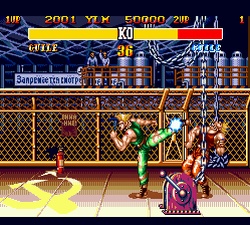
The story of Street Fighter II: Special Champion Edition is about the moment an arcade legend stopped living only in noisy game rooms and moved into our homes, onto our Sega consoles. In the early ’90s Capcom hit so hard that quarters clinked louder than the soundtrack: Street Fighter cabinets drew lines you didn’t want to leave. People learned half-circles and quarter-circles by feel, whispered “hadouken” like a spell, debated shoryuken timing, and waited to slot Guile’s Sonic Boom right into a counter. When that Mega Drive cartridge showed up with the familiar logo and that little tick — II’ — we jokingly read it as “two with a stick,” and called it Street Fighter 2: Special Champion, “the Special,” or simply “Champion.” It buzzed with the same arcade energy — competitive, rowdy, joyful.
From arcades to “Champion”
The arcade original redefined fighting games: not just trading blows, but footsies with spacing, baits, whiff punishes, and reaction checks. Champion Edition made the move everyone gossiped about around the cabs: playable bosses and mirror matches — Ryu vs. Ryu, Ken vs. Ken. Hyper Fighting poured kerosene on the fire — sped things up, tweaked moves, and made the stages crackle. When Capcom prepped the Genesis version, Street Fighter II’: Special Champion Edition neatly bundled that whole arc: Champion as the foundation, Turbo’s spark on top, and that rhythm that makes your thumb roll quarter-circle forward-forward on instinct.
On the outside — a bold marquee; inside — the familiar crew: Ryu and Ken, Chun-Li, Blanka, Dhalsim, Guile, Zangief, E. Honda, and the once-feared, now-tamed bosses — Balrog, Vega, Sagat, and M. Bison. The boxes read Special Champion Edition, back-of-box blurbs sometimes flashed SFII’ S.C.E., and in conversation it turned into “Special Champion Edition” without a hint of shame. Most importantly, the feeling of “the real arcade at home” landed perfectly: the music, the sprites, that breath before the round when the world goes still and you just know the first low-kick check is coming.
How the “Special” hit Sega
By the time carts made it to shops and market stalls, the name was already ahead of them. Street Fighter II was a household term, and the version with the dash — II’ — felt like the real “updated arcade.” On Genesis it fit like a glove. Sega’s six-button pad was your best sparring partner: lights and heavies under your fingers without claw grips or compromises. With that, the Champion Edition side opened up just right: speed set to taste, a “Hyper” option in the menu, and with friends it was always, “flip on Turbo and let’s go.” And yeah, sometimes someone asked to “turn on Champion,” meaning Champion Edition mode — where mirrors and bosses stood shoulder to shoulder.
It spread fast, and felt cozy doing it. Local game clubs slotted it into evening brackets, flea-market vendors whisked out carts with that gleaming Special Champion Edition logo, while bootleg stickers sometimes said “Street Fighter 2 S.C.E.” or just printed the full title. Mini-tournaments kicked off in stairwells: winner stayed, loser gave up the seat — arcade law. Some swore fealty to Zangief and planted folks with Spinning Piledrivers, some drilled Chun-Li confirms into Lightning Legs, and others discovered that “Sonic Boom” wasn’t about a blue hedgehog, but Guile’s precise charge if you hold back long enough.
Why it won people over
Special Champion Edition managed to bottle the magic of competition — the kind that made every arcade win loud and every loss a lesson. It wasn’t just a “home version,” it was a living slice of the scene on your couch. Even the title flashes and stingers, the announcer’s “Round One — Fight!”, became part of the ritual. In “the Special,” Champion Edition’s tradition meshed perfectly with Hyper Fighting’s pace, so the chatter wrote itself: “you on Champion or Hyper?”, “how’s your hadoukens — double-tempo or one clean input?” And no matter how many games rolled through, that little II’ tick locked into memory as the badge of that era — honest scraps where spacing beats scramble, and one clean shoryuken punish is worth more than ten empty jumps.
In our neck of the woods, Street Fighter II: Special Champion Edition also bridged generations. The arcade regulars passed down tech to kids picking up a Sega pad for the first time. That’s how the jokes, slang, and even odd pronunciations — “Special Champion Edition,” “Champion,” “Turbo Street,” “Dash version” — became gamer folklore. And every time a room went quiet and two fighters were all that remained on-screen, it felt like we were back there again — among soft CRT scanlines, tokens in your pocket, and a familiar hadouken tracing the diagonal straight into history.